 Nederlands
  English
  Français
  Deutsch
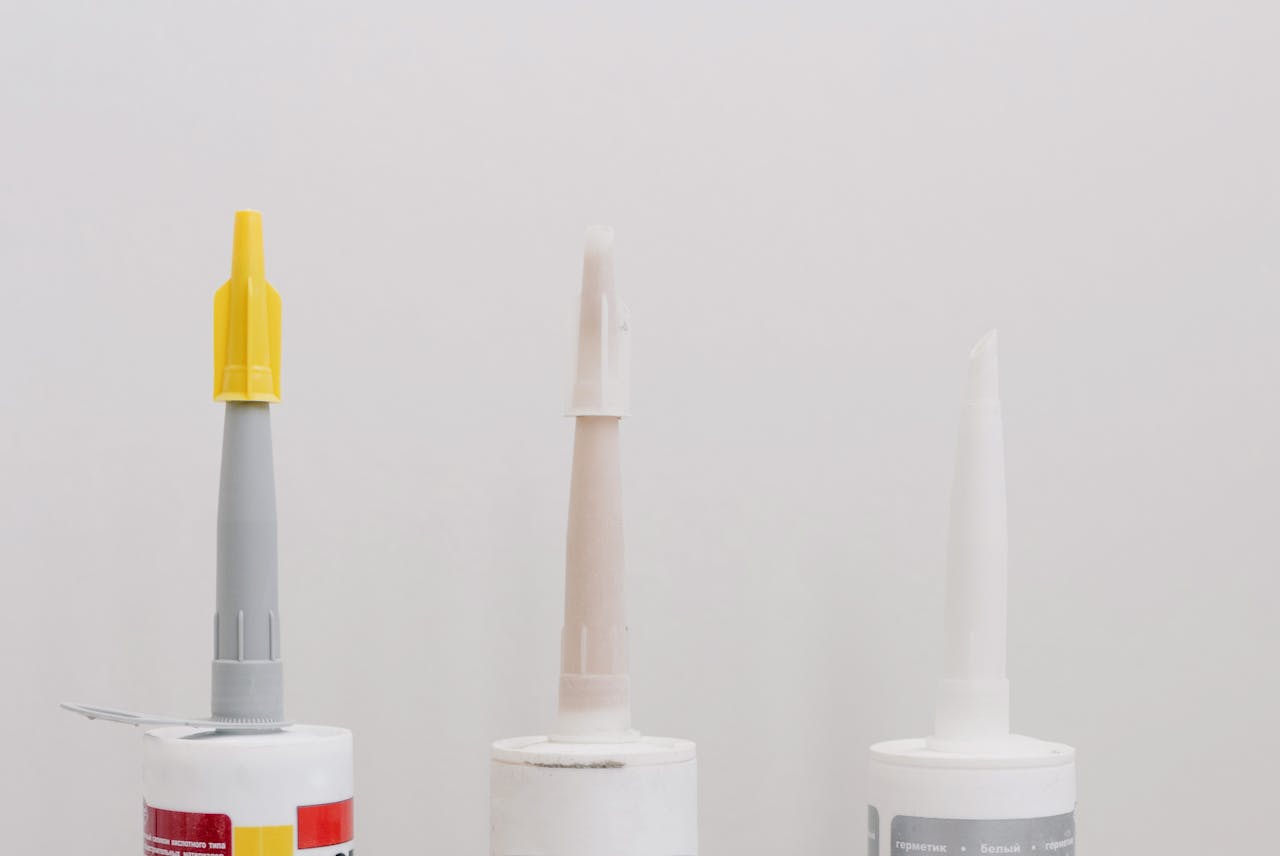
Build Faster and Safer with the Right High-Tack Adhesive
High-tack adhesive exists for the moments when gravity seems determined to fight you. Heavy wall panels creeping down the substrate, façade elements that will not stay where you put them, long minutes spent bracing, propping, and clamping just to keep things in place. On busy jobsites, those delays add up, and they often lead to compromises in appearance when visible fixings become the only quick solution.
High-tack adhesive is designed to change that equation. Compared to a regular construction adhesive, it offers instant grab, very high initial tack, and enough internal strength to hold heavy components with reduced or even no mechanical fixing. That means faster installation, cleaner details without exposed screws or nails, and more confidence when you walk away from a completed job. As a family-driven specialist in professional adhesives and sealants, we at VDB Adhesives supply high-tack solutions such as Seal-it® 360 High-Tack to help trade and industry professionals deliver better results on demanding construction and renovation projects.
What High-Tack Adhesive Means From a Technical Point of View
From a technical perspective, a high-tack adhesive is engineered for very high initial tack and green strength. Initial tack is the instant grab you feel the moment two substrates meet. Green strength is the mechanical strength the adhesive develops before it reaches full cure. Combined with a thixotropic consistency, which lets the product stay where it is applied without sagging, these properties keep materials from slipping on vertical or overhead surfaces.
It is important to separate initial tack from final bond strength. Initial tack holds parts in place during installation, which is why products sold as high-tack adhesive or high-tack sealant feel so sticky and solid right away. Final bond strength develops over time as the adhesive cures, giving the assembly its long-term load-bearing capacity and resistance to movement, vibration, and weather. Many modern high-tack products are hybrid polymers, which means they combine strong bonding with sealing properties so they can both fix and help protect joints from moisture and air ingress.
Compared to a standard construction adhesive, a high-tack construction adhesive usually has higher viscosity and greater internal cohesion. It is developed for strong wet adhesion that grips immediately, especially in vertical and overhead applications where a thinner product would slump or run. This is what lets you set a panel or profile, press it once, and feel confident that it will not slide down the wall.
There are a few misconceptions worth clearing up. High tack does not mean you can skip surface preparation. Dust, loose particles, moisture, or oil will still weaken the bond, no matter how sticky the adhesive feels. Instant grab also does not mean instant full cure. Even when a product is marketed as “no clamping needed,” there can be situations where large or very heavy elements still require minimal temporary support for a certain time, depending on size, weight, and orientation. Cure times vary, but you should always plan for a period during which the adhesive must not be heavily loaded or disturbed.
When Professionals Choose High Tack Over Standard Adhesive
On site, the choice between standard and high-tack adhesive often comes down to how difficult an element is to support and how much freedom you have to use mechanical fixings. When you are dealing with heavy panels, façade elements, or components that are awkward to brace, a high-tack adhesive can save a lot of effort and reduce risk. It becomes especially useful where drilling holes is not allowed or where visible screws and nails would spoil the design.
High tack comes into its own on vertical façades, ceilings, and tight spaces. In these locations, clamps may not fit, and drilling might mean working overhead with power tools or creating dust in sensitive finished areas. A well-chosen high-tack construction adhesive lets you position elements more safely, with fewer steps and less equipment around you.
There are still many cases where a standard construction adhesive is enough. Light trims, fully supported joints, or small battens that are later screwed or nailed often do not justify a high-tack product. In contrast, the decision for high tack is clear when you are bonding large wall panels, exterior soffit elements, façade cassettes, or parts that will be exposed to wind loads and movement.
There are also environmental and safety reasons to prefer adhesive bonding. By reducing drilling into façades, you minimize thermal bridges and keep airtight layers intact. On thin cladding, delicate decorative profiles, or insulation boards, avoiding mechanical fixings can prevent cracking and other damage that shortens service life.
Typical Applications for High-Tack Adhesives on Site
High-tack adhesive has become a standard solution for cladding and façade work. Trade professionals use it to bond composite or metal cladding, façade cassettes, corner profiles, and decorative trims where a clean, no-visible-fasteners finish is important. The adhesive joint remains hidden, and surfaces stay uninterrupted, which is especially valuable on modern façades with crisp lines.
Inside the building, high-tack products are widely used for panel fixing and interior fit-out. Typical examples include.
- Bonding interior wall panels and decorative boards
- Fixing skirting boards without visible nails
- Securing window sills and thresholds
- Installing stair treads and nosings
- Mounting heavy decorative elements in “no-nail” applications
Insulation and building components are another major area. High-tack adhesive is often chosen for fixing insulation boards to walls, bonding thresholds, attaching mailboxes, signage, or façade accessories. In many of these situations, drilling through the insulation or finish would be inefficient or difficult to seal later.
Because many high-tack products are also high-tack sealants based on hybrid technology, they do more than stick two surfaces together. They can help seal around bonded components and accommodate slight movement caused by temperature changes, vibration, and moisture cycles. This combination of bonding and sealing contributes to durable, low-maintenance details that perform well over time.
Working Smart With High-Tack Adhesive on the Jobsite
To get all the benefits of high-tack adhesive, it pays to follow a few best practices. Good preparation and technique often make the difference between a quick, clean job and a callback.
Helpful on-site habits include.
- Clean and degrease all bonding surfaces carefully
- Check product instructions for temperature and humidity limits
- Apply consistent beads, avoiding gaps and air pockets
- Respect open time and press parts together firmly
- Mark heavy or critical elements so no one loads them too early
Even with a very strong high-tack construction adhesive, some elements may still need short-term support. A long façade panel on a hot day or a deep soffit element overhead can generate leverage that no instant grab can completely offset. Short-term wedges, blocks, or tapes can be enough, as long as they are planned into the sequence and removed only after the adhesive has gained enough strength.
Compatibility is another point to keep in mind. High-tack adhesives are typically formulated to bond well to common substrates like concrete, brick, stone, wood, metals, plastics, and many coated surfaces. Painted or powder-coated elements, unknown plastics, or very smooth, non-porous finishes are good candidates for a simple adhesion test before full installation. When there is any doubt, it is wise to consult a technical expert or check the product data sheet.
Working with high-tack adhesive can also bring cost and efficiency gains. You reduce the number of fasteners, save drilling time, and create much less dust and noise. Finishing work on visible surfaces is also lighter because there are no screw heads to fill and sand. Over a full project, these benefits free up labor and help keep schedules on track.
How Seal-it® 360 High-Tack Helps You Build Better
At VDB Adhesives, we supply Seal-it® 360 High-Tack as a professional-grade option for demanding cladding, panel fixing, and façade applications. It is designed to deliver extremely high initial grab so that heavy or vertical elements can be positioned with confidence, alongside strong final bond strength for long-term reliability.
Seal-it® 360 High-Tack is suitable for both interior and exterior use and is compatible with a wide range of building substrates. Because it is based on advanced hybrid technology, it functions as a high-tack sealant that can bond and help seal in one step. This simplifies complex assemblies, cuts down on the number of separate products needed on site, and helps professionals keep details clean, durable, and visually consistent.
Choose the Right High-Tack Solution for Your Next Project
High-tack adhesive is not just a stickier version of a standard construction adhesive. It is a different tool, built for instant grab on heavy and vertical elements, for cleaner aesthetics without visible fasteners, and for faster, more efficient installations with fewer interruptions for drilling and bracing. When used correctly, it gives trade and industry professionals more freedom in design and detailing, while reducing the risk of bond failure and callbacks.
As you plan upcoming cladding, panel, and façade work, it is worth looking at where a high tack construction adhesive could replace or reduce mechanical fixings and simplify the build sequence. By choosing an appropriate high-tack sealant such as Seal-it® 360 High-Tack from a specialist supplier like VDB Adhesives, you put a reliable, versatile bonding solution into your daily toolkit and help every project move more smoothly from first panel to final inspection.
Get Reliable Bonding Performance For Your Next Application
If your project demands fast, secure bonding on challenging surfaces, our high-tack adhesive solutions are engineered to deliver consistent results. At VDB Adhesives, we work closely with you to match the right formulation to your production, performance, and regulatory needs. Tell us about your application and we will help you optimize strength, process efficiency, and cost. Ready to move forward with testing or a new specification? Contact us to get started.

